
Platform Overview
Smart Building Technology Platform
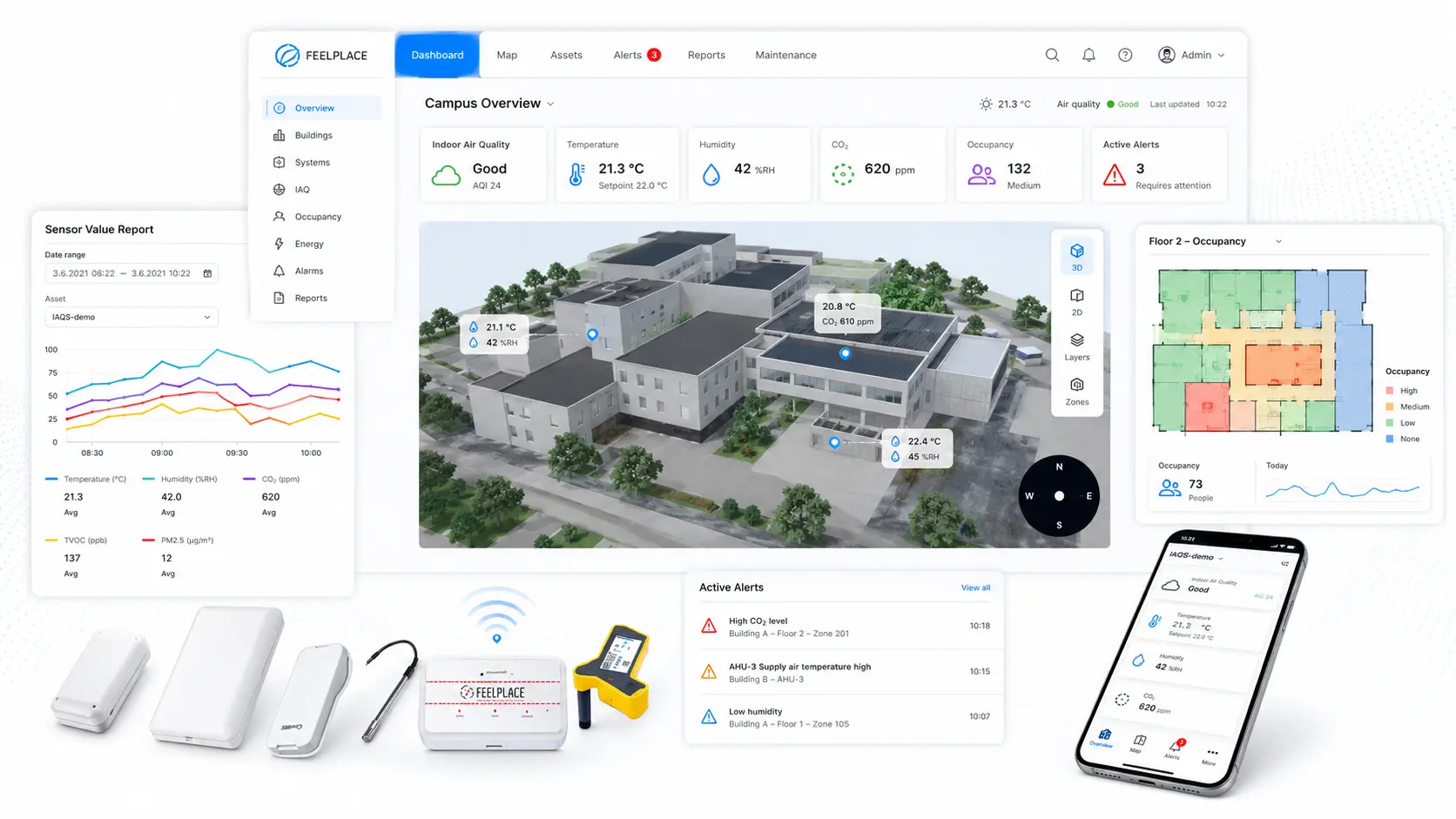
A practical smart building platform that connects wireless sensors, indoor air quality data, occupancy analytics, building health monitoring, and 3D visualization.
Definition
What Is a Smart Building Platform?
A smart building platform gathers live data from sensors, gateways, and building systems so facility teams can understand how a property performs in real time. The goal is not only automation, but better decisions about comfort, energy, maintenance, safety, and space use.
FeelPlace focuses on the building data layer: wireless IoT measurements, indoor air quality, people flow, occupancy, structural humidity, gateway connectivity, dashboards, alerts, and 3D context. This makes it useful for owners and service teams that need visibility without replacing every existing building system.
Where It Creates Value
Clear Outcomes for Building Teams
Each use case has its own operational goal, decision owner, and data need.
One Building Data View
Combine air quality, occupancy, energy-related signals, people flow, and building health measurements instead of checking isolated dashboards.
Faster Facility Decisions
Use alerts and trend views to detect comfort, ventilation, usage, or moisture issues before they become expensive operational problems.
Scalable Wireless Deployment
Start with one building, floor, or problem area, then expand the sensor network as the business case becomes clear.
Lifecycle Data
Track construction conditions, commissioning, daily operation, and long-term building performance in the same digital environment.
3D and Dashboard Interfaces
Use classic dashboards for reporting and a 3D digital twin when physical context helps teams explain findings.
Service Provider Ready
Give building service partners clear evidence for remote monitoring, diagnostics, reporting, and continuous improvement work.
Platform Modules
Core Smart Building Capabilities
The platform is built around measurement areas that map to real facility workflows.
| Module | What It Tracks | Decision It Supports |
|---|---|---|
| IAQ Monitoring | CO2, TVOC, PM2.5, humidity, pressure, and temperature. | Ventilation, comfort, health, and compliance evidence. |
| IoT Monitoring | Wireless sensor networks, gateways, live dashboards, alerts, and historical trends. | Remote building visibility and proactive maintenance. |
| Space Usage | Occupancy, room utilization, usage patterns, and underused areas. | Space planning, workplace strategy, and cost optimization. |
| People Flow | Movement patterns, routes, peak hours, congestion, and visitor behavior. | Service placement, safety planning, and visitor experience. |
| Digital Twin | 3D building model with room-level sensor and building data context. | Clear communication, investigation, and stakeholder reporting. |
Implementation
How a Smart Building Platform Rollout Works
A focused rollout starts with the decision you need to improve, then maps the sensors and dashboard views around it.
Define Goals
Select the measurable outcomes: IAQ, energy-related insights, space use, visitor flow, building health, or service reporting.
Map Data Points
Choose rooms, floors, sensor types, gateway locations, and dashboard views for the first useful deployment scope.
Deploy Wirelessly
Install sensors and gateways with minimal disruption, then validate signal quality and measurement coverage.
Operationalize
Set alert thresholds, reporting cadence, user roles, and improvement actions based on the collected data.
FAQ
Questions About Smart Building Technology Platform
Short answers for buyers and facility teams comparing smart building options.
Is a smart building platform the same as a BMS?
No. A BMS usually controls building equipment, while a smart building platform often adds a broader data layer for sensors, analytics, dashboards, and occupant or operational insights. FeelPlace can complement existing building systems.
Can FeelPlace start with only one use case?
Yes. Many deployments begin with indoor air quality, space usage, or construction monitoring and expand once the value is proven.
Why use wireless IoT sensors in buildings?
Wireless sensors reduce installation friction, make it easier to test problem areas, and allow the monitoring network to grow as building needs change.
Related FeelPlace Pages
Continue Exploring the Platform
These pages support the same buyer journey from different search intents.
Plan Your Smart Building Rollout
Tell us about your building, market, and measurement goals. We will map the right FeelPlace sensors, gateway setup, dashboard views, and deployment sequence.
Contact Sales